
Background
Head and neck cancer (HNC) is the sixth most common type of cancer worldwide, according to the 2022 cancer statistics [1]. This cancer type includes all malignancies that occur in the oral cavity, the larynx and the pharynx [2,3].
The treatment of HNC patients frequently leads to permanent changes to their physiology and anatomy, often paired with permanent loss of swallowing and speech functions. The extreme patient burden that HNC patients endure severely affects their quality of life [4].
High-resolution impedance manometry (HRIM) has shown potential to provide an objective quantification of the swallow quality. Currently, HRIM insertion without imaging aid (endoscope or fluoroscopy) is challenging and can lead to complications in the patients [5]. We hypothesise that this is one of the reasons why HRIM is not widely used in the outpatient clinic as a standard of care exam.
In this project, we aim to develop a system that takes HRIM to the outpatient clinic:
- We aim to integrate visual feedback on the HRIM catheter, reducing the need for secondary imaging techniques.
- We aim to perform robotised insertion of the HRIM catheter, for decreased ergonomic efforts on the clinical staff, and more accurate and precise insertion
Aim
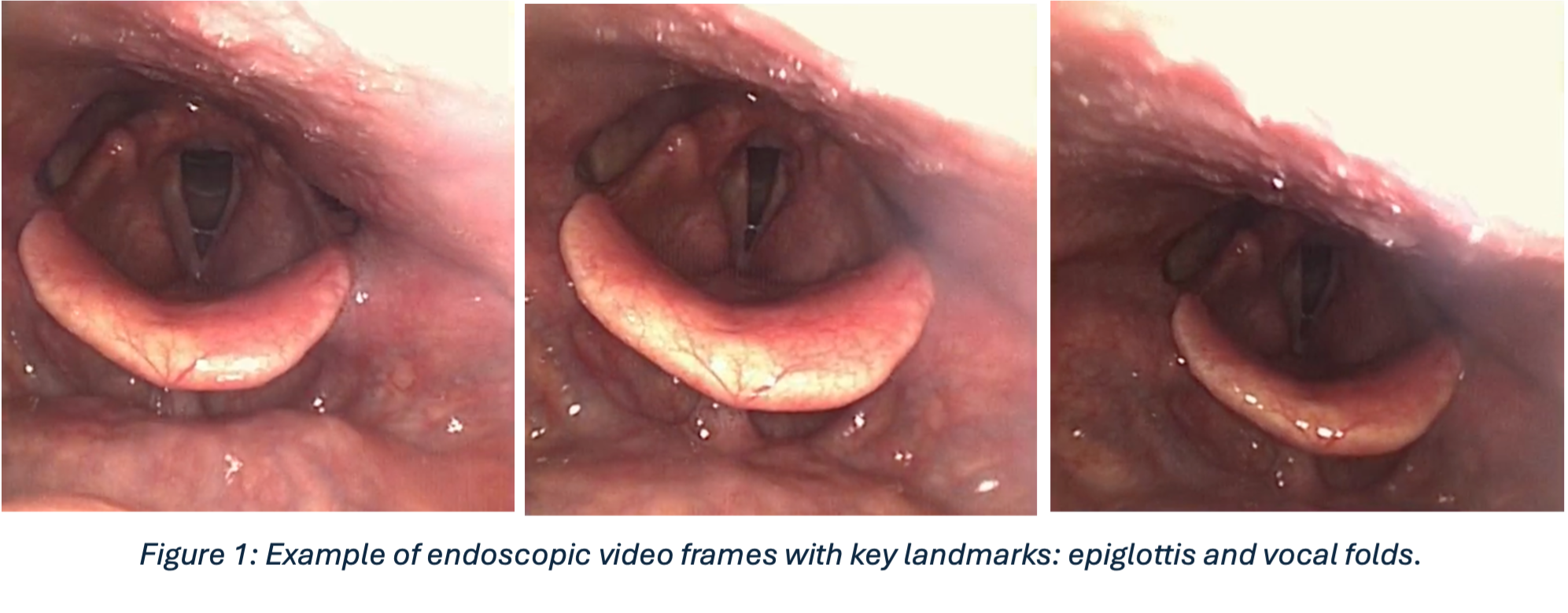
This assignment will focus on the automatic detection of key anatomical structures, such as the vocal folds and epiglottis, from (weakly) annotated nasal-endoscopic videos of head and neck cancer patients. The accurate detection of these landmarks will allow proper orientation and alignment of the robotised catheter for proper insertion into the oesophageal track.
References
[1] Bray, Freddie, et al. "Global cancer statistics 2022: GLOBOCAN estimates of incidence and mortality worldwide for 36 cancers in 185 countries." CA: a cancer journal for clinicians 74.3 (2024): 229-263
[2] Rettig, Eleni M., and Gypsyamber D’Souza. "Epidemiology of head and neck cancer." Surgical oncology clinics 24.3 (2015): 379-396.
[3] Gormley, Mark, et al. "Reviewing the epidemiology of head and neck cancer: definitions, trends and risk factors." British Dental Journal 233.9 (2022): 780-786.
[4] Howren, M. Bryant, et al. "Psychological factors associated with head and neck cancer treatment and survivorship: evidence and opportunities for behavioral medicine." Journal of consulting and clinical psychology 81.2 (2013): 299.
[5] Cheriyan, S. S., Schar, M., Woods, C. M., Szczesniak, M., Cock, C., Omari, T. I., ... & Ooi, E. H. (2023). Clinical application of pharyngeal high-resolution manometry in Ear, Nose and Throat (ENT) practice. Australian Journal of Otolaryngology, 6, 1-14.